Available now to order the new Regency Triple® featuring Corning® Enlighten™ Glass 
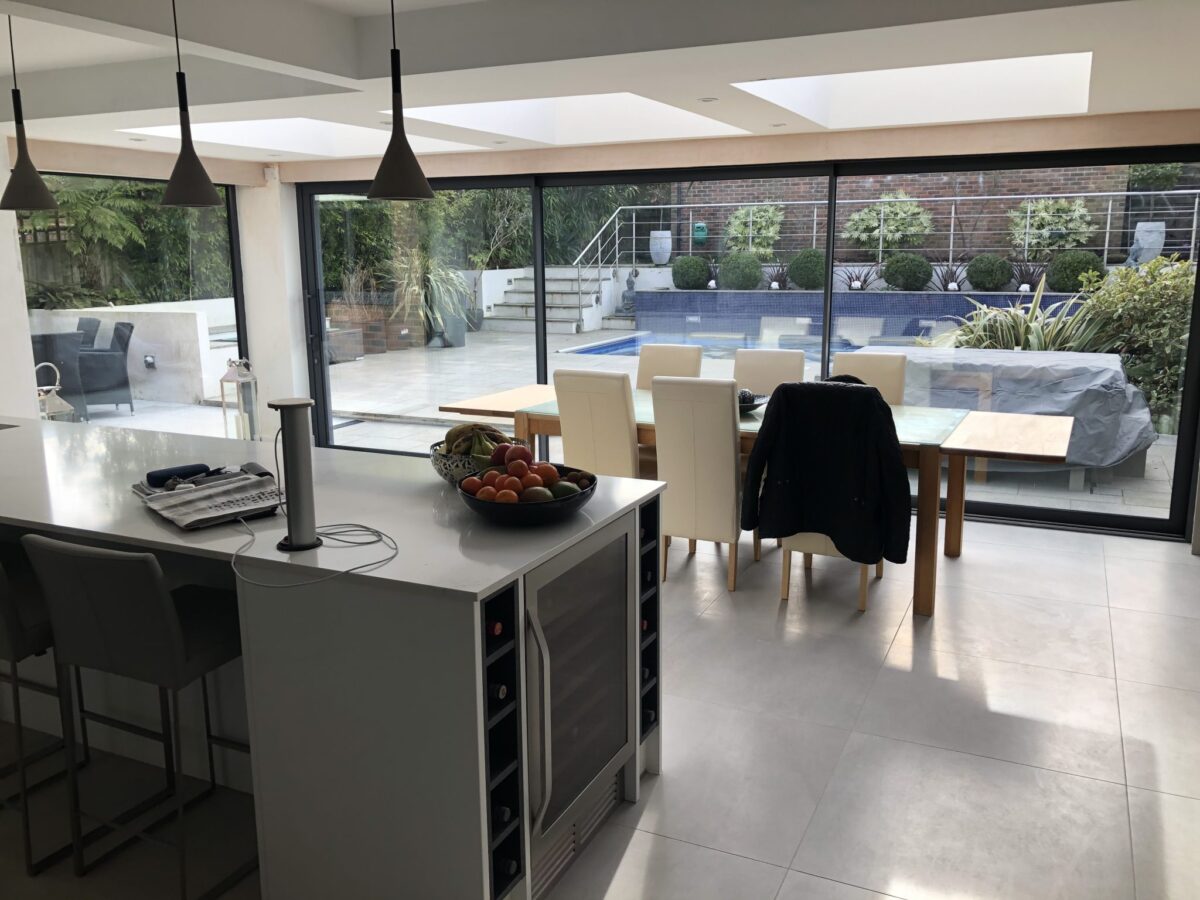
In most cases, no. Fitting bifold doors to a house in England is usually classed as permitted development, which means no planning application is needed. If you are replacing existing doors or a window with bifold doors of a similar appearance, you can generally proceed without permission.
There is an important second half to that answer, though. Planning permission and building regulations are two separate things, and while you often escape the first, the second almost always applies. There are also specific situations, conservation areas, listed buildings, flats, and a wider rear extension, where planning permission genuinely is required. This guide sets out the full position for 2026 so you know exactly where your project stands before you order anything.
For a standard house in England, replacing doors or fitting bifold doors into an existing or widened opening on the rear falls under permitted development rights. The Planning Portal is clear that replacing doors and windows of a similar appearance does not require planning permission.
That covers the most common scenario by far. Someone replacing a set of old patio doors, or knocking a single rear window through into a wider opening for bifold doors on the back of the house, is usually acting within permitted development.
We have found that the vast majority of the bifold door projects we install need no planning application at all. The homeowner’s worry about permission is often the first question at survey, and for a straightforward rear installation the answer is reassuringly simple.
The exceptions matter, because getting one wrong is expensive. Planning permission is required in these situations.
Listed buildings. If your property is listed, you will need listed building consent for changes to doors and windows, internal or external. This is separate from planning permission and is taken seriously. Unauthorised work to a listed building is a criminal offence, so this is not one to assume your way through.
Conservation areas. In a conservation area there may be additional restrictions, particularly on elevations facing a road. The rules vary between areas, so the local planning authority is the only reliable source.
Article 4 directions. Some councils issue an Article 4 direction that withdraws permitted development rights for a specific area or type of work. Where one applies, even a like-for-like replacement can need a planning application. You can check this by entering your postcode into your council’s planning system.
Flats and maisonettes. Permitted development rights apply to houses, not flats or maisonettes. If you live in a flat, you will generally need permission, and if you are a leaseholder you may also need consent from the freeholder or management company.
As part of a larger extension. If the bifold doors form part of a rear extension, the extension itself is what triggers the planning question. A single-storey rear extension projecting more than 3 metres from the original rear wall, or 4 metres for a detached house, moves beyond permitted development and needs an application. Our guide to extensions with bifold doors covers this in more detail.
The safe rule is this: if your property is listed, in a conservation area, a flat, or subject to an Article 4 direction, assume you need to check with your local planning authority before doing anything. It costs nothing to ask and can save a great deal.
This is the part people miss, and it is the more universal requirement.
Even when your bifold doors need no planning permission, they are notifiable under building regulations. Replacement glazing has to meet current standards on thermal performance, safety glazing in critical locations, means of escape from habitable rooms, and ventilation.
The Planning Portal confirms that replacement doors and windows are subject to building regulations covering exactly these areas. In practice, thermal performance means the doors must hit a U-value target, safety glazing means toughened or laminated glass in critical locations, and means of escape means the opening must preserve a route out of habitable rooms where one is required.
None of this is a barrier to a properly specified bifold door. Quality systems from Origin and Smarts meet these standards comfortably. It simply means the work has to be signed off correctly.
There are two routes to building regulations compliance, and the difference matters when you come to sell.
The clean route is to use an installer registered with a competent person scheme such as FENSA or Certass. A registered installer self-certifies the work and issues you a certificate confirming it meets building regulations. No separate application to building control is needed.
The alternative is to notify your local authority building control department directly, who inspect the work and issue a completion certificate.
Either way, you end up with a certificate. This is the document a conveyancing solicitor asks for when you sell the property. Without it, you may face a request for indemnity insurance or a retrospective sign-off, both of which are avoidable hassles. This is a genuine reason to use a registered installer rather than an unregistered fitter, regardless of the door quality.
It is worth being straight about the consequences of getting this wrong, because the paperwork feels abstract until it is not.
We have found that the planning and certification side causes more problems at the point of sale than during the installation itself. A homeowner who used an unregistered fitter years ago, with no certificate to show for it, discovers the gap only when their buyer’s solicitor raises it. At that stage the fix is slower and costlier than doing it right at the outset.
In our experience, using a registered installer from the start works better than saving money on an unregistered one, because the certificate protects the value of the work for as long as you own the house and smooths the eventual sale. The upfront saving on a cheaper, uncertified fit is routinely wiped out later.
Cheltenham and the surrounding area have a large stock of period and character properties, and these need more thought on the planning side specifically.
If the property is listed or in a conservation area, the appearance of the doors and their position on the elevation come under scrutiny. The rear of a property is generally treated more flexibly than a principal elevation facing the road, but this is not guaranteed and depends on the local authority.
Beyond planning, older properties bring practical installation challenges in an older house, from out-of-square openings to uncertain structure above. We check both the regulatory and the physical position at survey before anything is ordered.
To be clear about the split, here is how it works on a typical project with us.
We install to building regulations standards as a matter of course, and the certification follows the registered-installer route so you receive the paperwork you need. What we cannot do is grant planning permission or listed building consent, which only your local authority can.
So the division is simple. You or we confirm whether your specific property needs planning permission or consent, usually a quick check with the local authority for anything listed, in a conservation area, a flat, or under an Article 4 direction. We handle the building regulations compliance and the certificate. Our overview of the installation process sets out how this fits into the wider job.
The honest answer to whether your bifold doors need planning permission depends on your specific property and where the doors are going. For most rear installations on a standard house, the answer is no, with building regulations handled through certification. For anything listed, in a conservation area, a flat, or under an Article 4 direction, it is worth a quick check first.
We install across Cheltenham, Stroud, Cirencester, Gloucester, Tewkesbury and Worcester, with nationwide supply available. At survey we can talk through where your project sits on both planning and building regulations. You can see what customers say about us on Trustpilot.
This guide is general information, not formal planning advice. Always confirm your own position with your local planning authority before starting work. Every quote is free and bespoke to your opening. Get in touch to arrange a survey.


